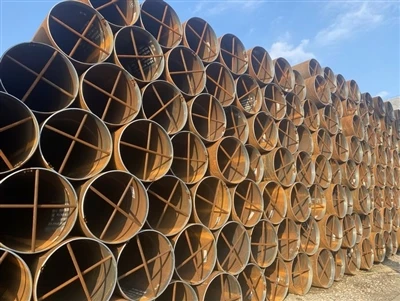
API 5L Gr.B pipe is a widely used steel pipe in the oil and gas industry, known for its strength and durability. One of the most critical factors in selecting the appropriate pipe for a project is understanding its pressure rating. The pressure rating of API 5L Gr.B pipe varies depending on several factors, including wall thickness, diameter, and manufacturing process. In this blog post, we'll explore the pressure rating of API 5L Gr.B pipe and answer some commonly asked questions about this essential industrial material.
How does wall thickness affect the pressure rating of API 5L Gr.B pipe?
The wall thickness of API 5L Gr.B pipe plays a crucial role in determining its pressure rating. As a general rule, pipes with thicker walls can withstand higher internal pressures compared to those with thinner walls. This relationship is based on the fundamental principles of material science and engineering.
The pressure rating of API 5L Gr.B pipe is calculated using the Barlow's formula, which takes into account the pipe's outside diameter, wall thickness, and the material's specified minimum yield strength (SMYS). For API 5L Gr.B pipe, the SMYS is typically 35,000 psi (241 MPa).
Barlow's formula: P=(2 * S * t) / D
P=Internal pressure (psi)
S=Specified minimum yield strength (psi)
t=Wall thickness (inches)
D=Outside diameter (inches)
As we can see from this formula, increasing the wall thickness (t) directly increases the pressure rating (P) of the pipe. For example, if we consider two API 5L Gr.B pipes with the same outside diameter but different wall thicknesses, the pipe with the greater wall thickness will have a higher pressure rating.
It's important to note that while increasing wall thickness does improve pressure ratings, it also increases the weight and cost of the pipe. Engineers and project managers must carefully balance these factors when selecting the appropriate pipe for their specific application.
Additionally, the relationship between wall thickness and pressure rating is not always linear. Factors such as manufacturing tolerances, material properties, and safety factors must be considered when determining the actual working pressure of a pipe in a given application. Industry standards and codes, such as ASME B31.3 for process piping, provide guidelines for calculating allowable working pressures based on these factors.
What are the differences in pressure ratings between seamless and welded API 5L Gr.B pipes?
API 5L Gr.B pipes are available in both seamless and welded varieties, each with its own characteristics that affect pressure ratings. Understanding the differences between these two types is crucial for selecting the right pipe for a specific application.
Seamless pipes are manufactured by heating a solid steel billet and piercing it to create a hollow cylinder. This process results in a pipe with no longitudinal seam, providing uniform strength and pressure resistance around the entire circumference of the pipe. On the other hand, welded pipes are made by rolling flat steel plates into a cylindrical shape and welding the seam.
API 5L Gr.B pipes have higher pressure ratings compared to their welded counterparts of the same dimensions. This is primarily due to the absence of a welded seam, which can be a potential weak point in the pipe structure. The seamless construction ensures a more uniform distribution of stress under pressure, resulting in a higher overall pressure rating.
However, it's important to note that modern welding techniques have significantly improved the quality and strength of welded pipes. High-frequency welding (HFW) and electric resistance welding (ERW) processes can produce welds that are nearly as strong as the base metal. In many cases, the difference in pressure ratings between seamless and welded pipes has become minimal, especially for smaller diameter pipes.
1. Seamless pipes typically have a slight advantage in pressure ratings, especially for larger diameters and higher-pressure applications.
2. Welded pipes may have lower pressure ratings, but the difference is often negligible for smaller diameters and moderate pressure applications.
3. The quality of the welding process and post-weld heat treatment can significantly impact the pressure rating of welded pipes.
It's worth noting that while seamless pipes may offer higher pressure ratings, they are generally more expensive to manufacture than welded pipes. This cost difference can be a significant factor in project budgeting and pipe selection.
In practice, both seamless and welded API 5L Gr.B pipes are widely used in the oil and gas industry. The choice between the two often depends on factors such as:
API 5L Gr.B pipes for their specific applications.
How do temperature and external loads impact the pressure rating of API 5L Gr.B pipe?
While the base pressure rating of API 5L Gr.B pipe is primarily determined by its dimensions and material properties, real-world applications often involve additional factors that can significantly impact the pipe's performance. Two crucial factors to consider are temperature and external loads.
The operating temperature of a pipeline system can have a substantial impact on the pressure rating of API 5L Gr.B pipe. As temperature increases, the strength of the steel decreases, which in turn reduces the pipe's ability to withstand internal pressure. Conversely, very low temperatures can lead to embrittlement, potentially causing the pipe to become more susceptible to brittle fracture.
1. High temperatures: As the temperature rises, the yield strength and tensile strength of the steel decrease. This reduction in strength necessitates a derating of the pipe's pressure capacity. Industry standards such as ASME B31.3 provide temperature derating factors for various materials, including API 5L Gr.B steel.
2. Low temperatures: While low temperatures generally increase the strength of steel, they can also reduce its ductility. This can make the pipe more susceptible to brittle fracture, especially in the presence of stress concentrations or impact loads. Special consideration must be given to the pipe's notch toughness properties when operating in low-temperature environments.
3. Thermal expansion: Temperature changes can cause thermal expansion or contraction of the pipe, leading to additional stresses. These thermal stresses must be accounted for in the overall stress analysis of the piping system.
4. Material selection: For extreme temperature applications, alternative materials or grades may be more suitable than standard API 5L Gr.B pipe.
In addition to internal pressure, API 5L Gr.B pipes are often subject to various external loads in real-world applications. These external loads can significantly affect the pipe's overall stress state and, consequently, its effective pressure rating.
1. Soil loads: For buried pipelines, the weight of the soil above the pipe creates additional compressive stresses. The depth of burial and soil properties must be considered in the overall stress analysis.
2. Traffic loads: Pipelines buried under roads or in areas with heavy equipment traffic may experience cyclic loading, which can lead to fatigue issues over time.
3. Wind and wave loads: For above-ground or offshore pipelines, environmental forces such as wind and waves can impose significant lateral loads on the pipe structure.
4. Seismic loads: In earthquake-prone regions, pipelines must be designed to withstand seismic events, which can impose both lateral and axial loads on the pipe.
5. Thermal expansion loads: As mentioned earlier, temperature changes can cause thermal expansion or contraction, leading to additional stresses in the pipe, especially at bends, tees, and other fittings.
6. Support and anchor loads: The method of supporting or anchoring the pipe can introduce localized stresses that must be accounted for in the overall design.
To account for these additional factors, engineers typically perform a comprehensive stress analysis that considers both internal pressure and external loads. This analysis often involves using specialized software tools that can model complex piping systems and calculate combined stresses based on various loading scenarios.
Industry standards and codes, such as ASME B31.3 for process piping or API RP 1102 for crossing railroads and highways, provide guidelines for considering these additional factors in pipeline design. These standards often require the use of combined stress ratios or similar methods to ensure that the total stress in the pipe, including both pressure and external loads, remains within allowable limits.
API 5L Gr.B pipe provides a good starting point for design, real-world applications require careful consideration of factors such as temperature effects and external loads. By accounting for these additional factors, engineers can ensure that pipelines are designed and operated safely, reliably, and efficiently across a wide range of operating conditions.